
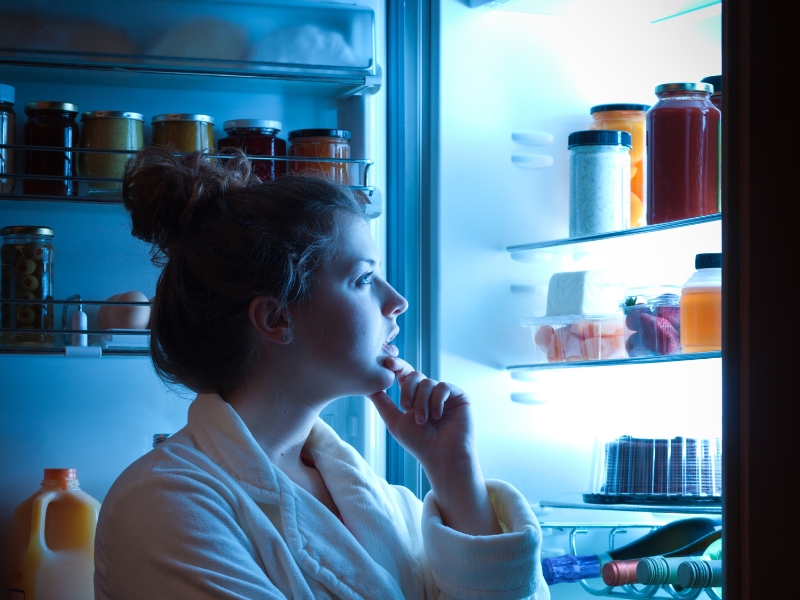
You’re on track with your diet, making healthy food choices during the day, but the cravings hit as soon as the evening sets in. Sound familiar? Late-night cravings are common, especially when dieting, and they can derail your progress if not managed properly. Understanding why they happen is the first step towards overcoming them.
This article will explore the science behind late-night cravings, investigate whether they signal nutrient deficiencies, and provide effective management strategies. Plus, we’ll show you how a personalised nutrition plan can help you stay on track without feeling deprived.
What causes late-night cravings when you’re trying to lose weight?
Late-night cravings often occur due to a mix of biological, psychological, and lifestyle factors. Here’s why you might find yourself reaching for snacks at night:
- Hormonal imbalance: Your hunger and satiety hormones play a key role in cravings:
- Ghrelin (the hunger hormone) increases in the evening, making you feel hungrier.
- Leptin (satiety hormone) decreases at night, reducing feelings of fullness.
- Cortisol (stress hormone) can spike in response to restrictive dieting, increasing cravings for high-calorie foods.
- Caloric restriction and undereating: If you’re cutting calories drastically, your body compensates by triggering strong hunger signals, particularly at night.
- Emotional triggers and stress: Emotional eating is common at night, especially if stress or boredom is involved. Your brain associates food with comfort, leading to cravings for sugary or fatty foods.
- Circadian rhythm and habit formation: Your body’s natural clock influences appetite. Studies suggest that cravings for high-carb and high-fat foods are strongest in the evening. If you’ve developed a habit of snacking late at night, your body expects it and reinforces the craving. To better understand your body’s natural patterns and how they influence cravings, learn about Circadian Rhythm and how it affects your appetite throughout the day and night.
Is hunger at night a sign of nutrient deficiencies?
Late-night cravings aren’t always about willpower—they can sometimes signal nutrient deficiencies. When your body lacks essential nutrients, it may send signals that are misinterpreted as cravings.
Common nutrient deficiencies linked to cravings:
- Magnesium deficiency – This may cause cravings for chocolate.
- Iron deficiency – This can lead to cravings for red meat or even non-food items (pica).
- Protein deficiency – This may cause increased hunger, as protein promotes fullness.
- Healthy fat deficiency – This can trigger cravings for fried or high-fat foods.
- Fibre deficiency – This leads to poor satiety and more frequent hunger signals.
How can you manage late-night cravings without breaking your diet?
Managing late-night cravings requires a combination of strategic eating and habit changes. Here are effective strategies:
- Eat balanced meals throughout the day
- Ensure each meal contains protein, healthy fats, and fibre to keep you full longer.
- Avoid skipping meals, as it can trigger extreme hunger later in the day.
- Manage stress levels
- Practice meditation, deep breathing, or gentle exercise to reduce emotional eating.
- If stress is a trigger, consider journaling or mindfulness techniques to cope with emotions without food.
- Additionally, discover how you can effectively stop emotional eating with practical strategies and guidance tailored to your individual needs.
- Hydrate properly
- Sometimes, thirst is mistaken for hunger. Drink water before reaching for a snack.
- Herbal teas or warm lemon water can help curb cravings.
- Choose smart snack options
- If you must snack, opt for nutrient-dense foods like Greek yoghurt, nuts, or berries.
- Avoid processed snacks high in sugar and salt, as they lead to more cravings.
- Improve sleep quality
- Insufficient sleep can disrupt the hormone balance that regulates hunger, potentially leading to increased cravings.
- Prioritise 7-9 hours of quality sleep each night to support healthy hormone function and regulate appetite.
By incorporating these strategies into your routine, you’ll be on your way to discovering effective weight loss solutions that not only curb cravings but also support your long-term health goals.
What are the best foods to eat when craving something at night?
Instead of reaching for junk food, try these healthier alternatives:
| Craving | Healthier Alternative | Why It Works |
| Chocolate | Dark chocolate (70%+ cacao) | Contains magnesium, curbs cravings |
| Ice Cream | Frozen banana blended with Greek yoghurt | High in protein, naturally sweet |
| Chips | Air-popped popcorn with olive oil | High in fibre, low in calories |
| Sweets | Berries with cottage cheese | Provides protein and natural sweetness |
| Bread | Wholegrain toast with almond butter | High in fibre, it keeps you full longer |
While it’s important to indulge occasionally, understanding the impact of cheat meals on weight loss can help you make smarter choices when cravings strike at night, ensuring you stay on track without feeling deprived. By swapping processed snacks for nutrient-rich alternatives, you satisfy cravings without derailing your diet.
How does a personalised nutrition plan prevent late-night cravings?
A personalised nutrition plan can address the root causes of late-night cravings by ensuring you get the right nutrients in the right portions. Here’s how:
- Tailored macronutrient balance: A plan designed specifically for your lifestyle and metabolism ensures that you eat the right balance of protein, carbohydrates, and fats to keep you full longer.
- Meal timing adjustments: If you experience evening cravings, your plan can include strategic meal timing, ensuring you feel satisfied throughout the day.
- Managing emotional eating: A dietitian identifies emotional triggers and provides practical strategies to break the cycle of stress eating.
- Sustainable habits for long-term success: Unlike generic diet plans, a personalised approach ensures sustainable weight loss without extreme restrictions that lead to cravings.
When should you seek professional guidance for late-night cravings?
If your cravings are persistent, uncontrollable, or linked to emotional eating, seeking professional guidance can help.
Signs you might need expert support:
- Constant cravings despite eating balanced meals
- Emotional eating patterns (stress, boredom, or anxiety-driven snacking)
- Struggles with binge eating or food guilt
- Difficulty managing blood sugar levels
- Nutrient deficiencies affecting energy and well-being

Achieve lasting weight loss with a Personalised Plan
Struggling with late-night cravings? You don’t have to do it alone. A personalised nutrition plan from Santé By Sana can help you:
- Reduce hunger and cravings through tailored meal plans.
- Improve energy levels and metabolism with the right nutrients.
- Build long-term habits for sustainable weight loss.
Book a consultation with Santé By Sana today and take the first step toward a healthier, balanced lifestyle.